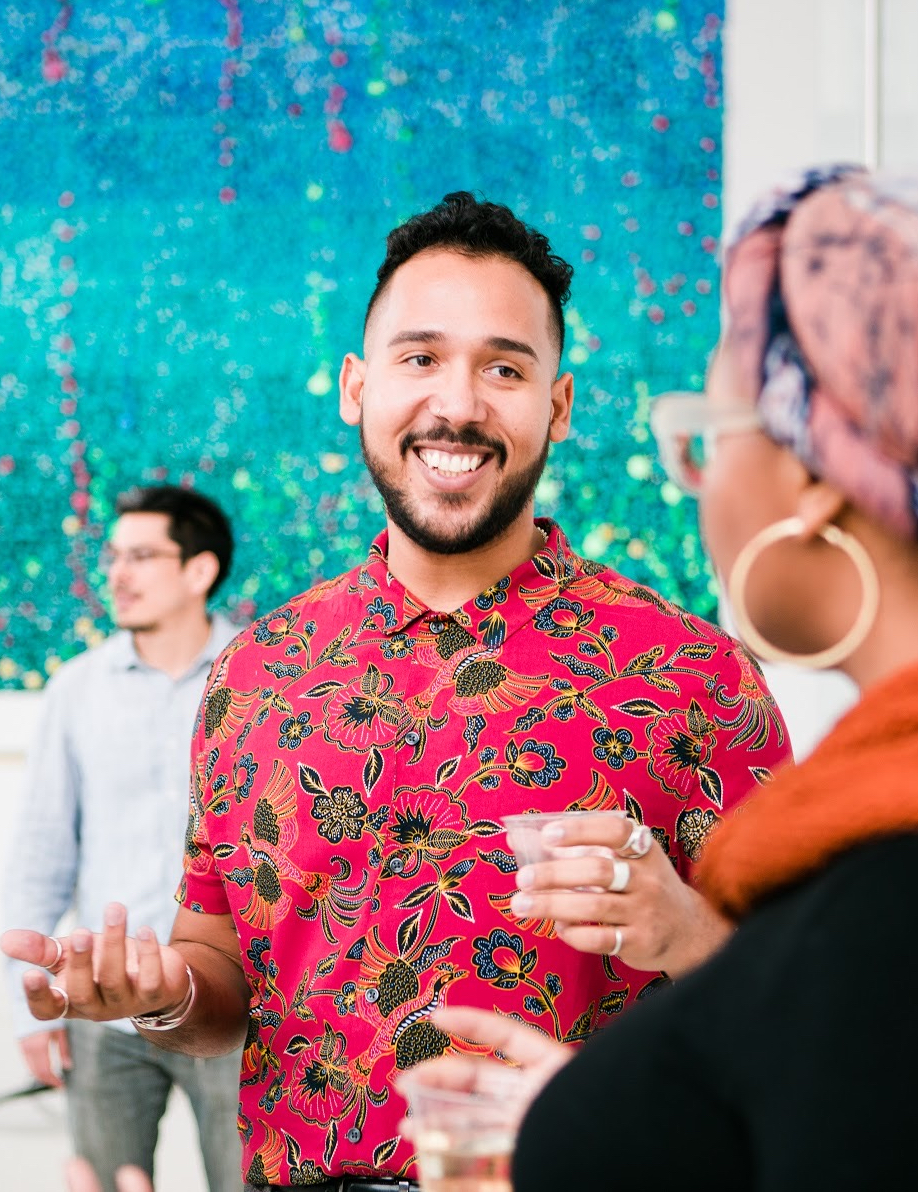
Michael Rosario

About Me

I'm a cognitive neuroscientist and environmental health researcher, originally from St. Croix in the US Virgin Islands. My work asks a question that sits between two fields that don't talk often enough: how do the environments people live in get under the skin and into the brain?

Concretely, I study how ambient air pollution and neighborhood social and physical conditions shape brain structure, memory systems, and cognitive health: and I follow that question across the lifespan. In children and adolescents, that means asking how pollutants affect hippocampal architecture as memory systems are still being built. In older adults, it means asking how neighborhood contexts, chronic stress, and personal behaviors relate to whether memory and its supporting brain systems are preserved or lost.

Answering that well requires methods from more than one discipline. I combine structural and functional neuroimaging, environmental exposure science, and advanced statistical modeling, employed in large cohorts including the Adolescent Brain Cognitive Development (ABCD) Study and the Health and Retirement Study (HRS). The goal is to identify environmental drivers of neurocognitive risk and resilience for memory across the lifespan.

I am increasingly interested in gene-environment interactions: how inherited risk shapes who is most vulnerable to a given exposure, and who is buffered against it.

Training

I earned my PhD in Neuroscience from Boston University with Karin Schon, where I studied positive and negative modulators of the medial temporal hippocampal memory system, cardiorespiratory fitness on one side and chronic psychosocial stress on the other. I'm currently a postdoctoral scholar at the University of Southern California, holding appointments in the Department of Population and Public Health Sciences with Megan Herting and at the Leonard Davis School of Gerontology with Lauren Brown and Jennifer Ailshire. That pairing is deliberate: it lets me work on the developmental and aging ends of a similar question at once.

Mentorship & Community

I came into science through programs built to widen the door: RISE as an undergraduate at the University of the Virgin Islands, then SPINES at the Marine Biological Laboratory, the Neuroscience Scholars Program, and the Robert Wood Johnson Foundation's Health Policy Research Scholars. That shaped how I work. I've mentored undergraduate and graduate researchers through projects presented at national conferences, co-founded my graduate program's diversity, equity, inclusion and justice committee, and served as an ambassador for the NIH Diversity Specialized Predoctoral to Postdoctoral Advancement in Neuroscience F99/K00 program.